
Searching Kent County Criminal Dockets
First figure out where the case lives. A felony that made it to the trial level sits in the 17th Circuit Court. Adult misdemeanors and traffic-related criminal matters stay in District Court. For Circuit cases, the official 17th Circuit Court Name Search offers a Criminal option open to the public. District cases run through MiCOURT or the local court's own service. Grand Rapids posts its 61st District FullCourt search. Wyoming offers a 62-A record search. Kentwood publishes a 62-B case grid. Need a current Circuit setting? The Hearing Schedule shows the next two weeks. For a full register, a filed document, or an official copy, go to the court clerk. Kent County gives you several ways in: the public portal, statewide search where the court participates, the local court service, a phone call, the clerk counter, courthouse terminals, mail requests, the 61st District Court's published email request route, and a court-specific copy request. One thing to skip. Court records do not use a general county FOIA request.
- Identify the Kent County court from the charge location, case type, or existing notice.
- Search the Circuit Criminal Name Search for a public Circuit felony matter, or use the appropriate District Court route.
- Match the result by full case number, court, filing year, and public party information.
- Use the hearing schedule for a near-term setting and confirm it with the assigned court if the entry conflicts with a notice.
- Contact the clerk for inspection, copies, or a complete public register when the online history is not enough.
Kent Criminal Name Search Fields
The 17th Circuit criminal form is built to narrow things down. It does not demand a full birth date. Want to look up a person? Give the first two letters of the first name and the first three of the last. Searching a business name works too. Plaintiff and Defendant party-type boxes are there. So are a required four-digit birth year, a file-year range, and reCAPTCHA before anything runs.
Two symbols will get you nowhere here. The form rejects the wildcards % and _. A live notice caps displayed criminal cases at filings from 2020 forward while automatic set-aside processing continues. Remember that these limits belong to the 17th Circuit Criminal Name Search alone. They do not apply to every Kent County criminal docket out there.
| Search field | Required | Kent County form detail |
|---|---|---|
| First and last name | Conditional | First two and last three letters are required for a personal-name search. |
| Business name | Alternative | At least three characters may be used instead of a personal name. |
| Party type | Optional | Plaintiff and Defendant boxes can narrow the role shown in results. |
| Year of birth | Required | Four-digit year only, with the form’s stated validation range. |
| File year range | Required | The current criminal dropdown displays 2020 through 2026. |
Note: A search form points you to a public case history. For questions about the official court file, the clerk is the source.
Inside a Kent County Criminal Docket
A Kent County criminal register can pack in a lot. Expect the court and division, case number, filing year, public case type, party role, charge or event line, judge, register dates, upcoming hearing, status, disposition, and a document indicator. District Court views may add a category, a balance where permitted, or an access notice. The hearing schedule leans on a tighter set: time, case name, case number, hearing type, judge, and courtroom.
Read entries in the order they appear. A charge line is only an allegation or event on the docket. It is never an outcome by itself. The plea, dismissal, diversion or deferred event, disposition, and sentence each stand as their own later entries. Treat an online status label with the same caution. It can leave out most of the procedural history.
| Charge or event line | A public filing or case event. It should not be read as a final finding. |
|---|---|
| Probable-cause event | A District Court step in a felony case before possible bindover. |
| Hearing setting | The listed time, hearing type, judge, and courtroom for a scheduled event. |
| Disposition | The recorded outcome or closing action for a charge or case. |
| Document indicator | A sign that a filing exists; it does not guarantee public online access to the document itself. |
Kent Criminal Cases: District to Circuit
Adult felony cases in Kent County start with real work in District Court. That court handles arraignment, bail, the probable-cause conference, and the preliminary examination. On a bindover, the 17th Judicial Circuit Court takes the felony trial-level matter. The Circuit Clerk keeps the case record. A complete Kent County case lookup can mean checking both dockets by case number once a record has crossed courts.
Misdemeanors and traffic-related criminal matters usually stay put in District Court. Kent County's lineup includes 59th District locations in Grandville and Walker. It also covers the 61st in Grand Rapids, 62-A in Wyoming, 62-B in Kentwood, and the 63rd District Court for its listed territory. Start with the arresting or charging jurisdiction as a practical clue. Then follow whichever court actually handled that stage of the case.
Kent criminal routing. District Court arraignment and preliminary work can appear before a felony bindover. The later Circuit docket is a separate trial-level record, so a no-result in one court does not settle the search in the other.
How a Criminal Case Moves
Follow a Kent County criminal docket from start to finish. You'll see the same path again and again. The case begins with a filing or charge, then arraignment, a probable-cause conference, and a preliminary examination. From there it may be bound over. It may be arraigned again in Circuit court, set for pretrial, and resolved by plea or trial. After that come the disposition and sentencing. Not every case walks the whole route, though. So treat the docket as a dated log of what has already happened in Kent County court records, not a forecast of the next entry.
Docket flow: Filing → Arraignment → Probable-Cause Conference → Preliminary Examination or Bindover → Pretrial → Plea or Trial → Disposition → Sentencing.
Some Kent County docket entries carry labels that sound like rulings but are not. A probable-cause conference is a felony-stage meeting, nothing more. The preliminary examination is where probable cause gets tested before any bindover. A motion is simply a request for a judicial order, and a disposition is the outcome recorded on the court docket. Read each term as procedure. None of them proves a fact the criminal docket does not actually show.
Older Kent Criminal Docket Gaps
Kent County online searches have real limits. Under its January 2026 notice, the 17th Circuit criminal search displays filings from 2020 forward. MiCOURT warns that public results are informational only, with listed exclusions and filters. The 61st District Court keeps nonpublic, sealed, Clean Slate, diversion, and deferred matters out of its public FullCourt. A missing result can also mean the case sits in another court. It may not have updated yet. It may also carry a different public label.
Don't guess from a blank screen. Verify the court, the case number, and the date range the system actually covers. Then ask the clerk about inspection or copies. The local Circuit access order allows a request. It must name a full case number or party name. Anyone without either identifier is directed to available indexes instead of broad, unspecified checks.
Courts That Hold Criminal Dockets
Felony records land with the Circuit Clerk after bindover. Each District Court clerk keeps its own court's records. Those cover misdemeanor, traffic-criminal, arraignment, probable-cause, and preliminary-examination matters. That split matters at the counter as much as online. The Circuit Clerk cannot convert a District Court history. That history stays a District record, not a Circuit record. And a District Court cannot hand over a later Circuit register it never kept.
The county's official District Court map and its court directory show the geographic divisions and contact points. Juvenile delinquency and child-protective matters live in the Circuit/Family structure. Statute and rule restrict public access there. An ordinary public criminal search will not surface those sensitive records.
Kent Criminal Hearing Calendars
Kent County's Circuit hearing schedule covers only the next two weeks and is expressly informational. The form searches by last name with first name. It also accepts a last name with a full date. A match can show time, case name, case number, hearing type, judge, and courtroom. The county also publishes a motion-calendar route starting from judge and case type. That helps when a case has a scheduled motion rather than a general appearance.
Recurring judge time blocks explain a calendar. They do not create a case-specific court date. Control rests with the court's signed notice. A later register event, the assigned judge, or the coordinator also controls. Duplicate or stale dates call for a check. Compare the most recent docket entry on the Kent County calendar. Then confirm with the court that owns the case. A setting can be adjourned while the old entry stays in history.
Note: A calendar display is a current-setting aid. The register of actions preserves the larger case chronology.
Sealed Dockets and Public Access
Michigan Court Rule 8.119 opens public case records. It covers registers too. Access closes only when a statute, court rule, or court order restricts it. Redaction of protected personal information is required too. So a court docket can show public case history without ever exposing a sealed document. Juvenile records stay generally nonpublic under Michigan law, subject to stated statutory exceptions. No public portal offers a workaround for a restricted record.
Kent County court records answer to the Michigan court rules and local access orders. A generic county FOIA request will not do. The judiciary sits outside Michigan FOIA's definition of public body, including a county clerk acting as Circuit Court clerk. A restricted record demands the court-authorized access process. Bring any required order or statutory exception.
Key rules.
MCR 8.119 establishes Michigan trial-court access, inspection, copying, redaction, and restriction rules.
MCL 15.232 explains why court case records follow court rules instead of the county FOIA process.
MCL 712A.28 generally limits juvenile-record access, subject to its listed exceptions.
Kent Criminal Clerk Access
Head to the Circuit Clerk counter. It serves any 17th Circuit file that is public. The counter sits at 180 Ottawa Avenue NW, Suite 2400, Grand Rapids, MI 49503. Published hours run Monday through Friday, 9 a.m. to 4 p.m. The phone line is 616-632-5480. Bring your request on the Circuit File/Copy Request Form. The form asks for the case or party name. It also asks you to choose between the full public file and selected documents.
Timing and fees follow a local order. Up to five specific active files are generally ready within thirty minutes. Anything pulled from storage takes longer, generally three business days. Copies cost $1 per page, and certification adds the published fee. The clerk's office has no public computer. Use the terminals at the courthouse Legal Assistance Center instead. A District criminal record belongs with the clerk of the particular District Court. This counter does not hold it.
The official Kent County Court Clerk page lists the Circuit records office, case-search links, and how to pay.
Kent Criminal Dockets and Federal Cases
Federal criminal cases never appear in the Kent County Circuit or District Court docket. The Western District of Michigan site covers Grand Rapids federal court and points to CM/ECF and PACER as federal record routes.
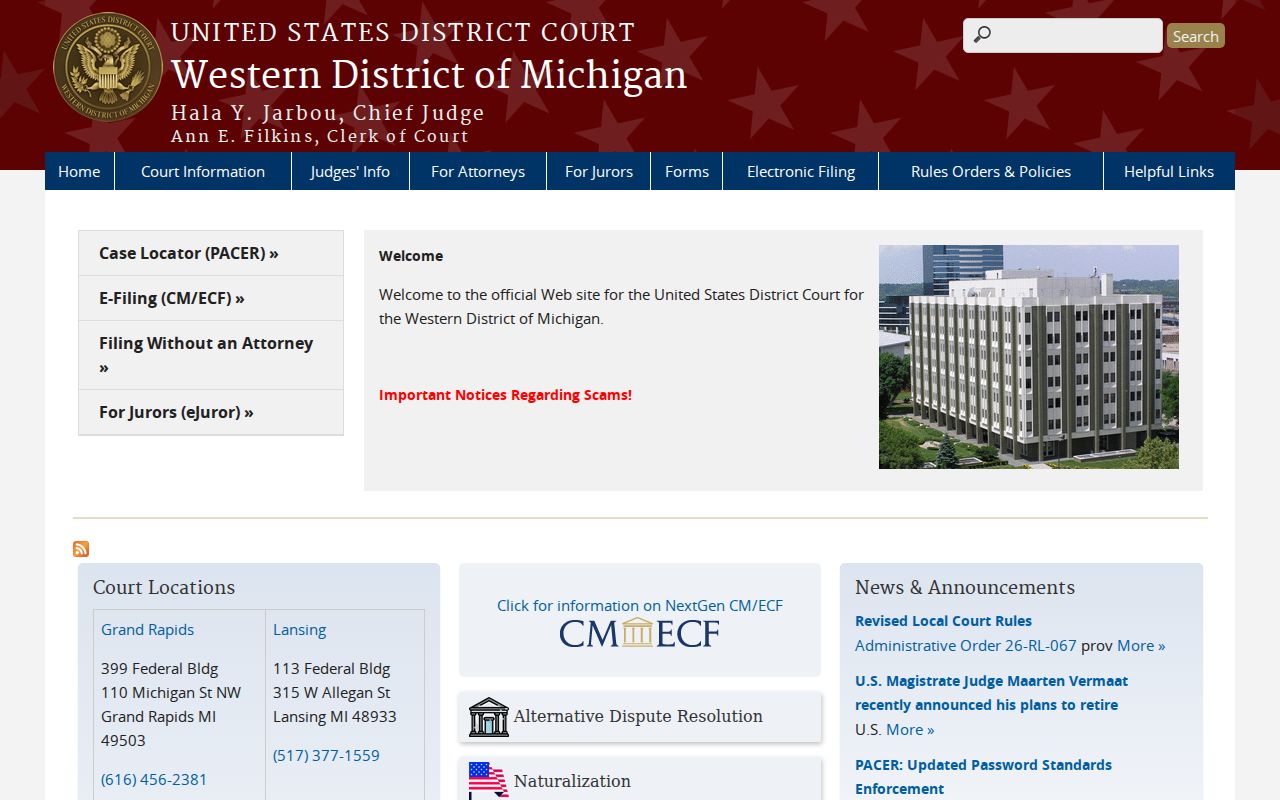
Keeping the federal route separate saves a state criminal case number from being searched in the wrong system. The court's CM/ECF information page describes the federal docket environment and its separate case-number format.
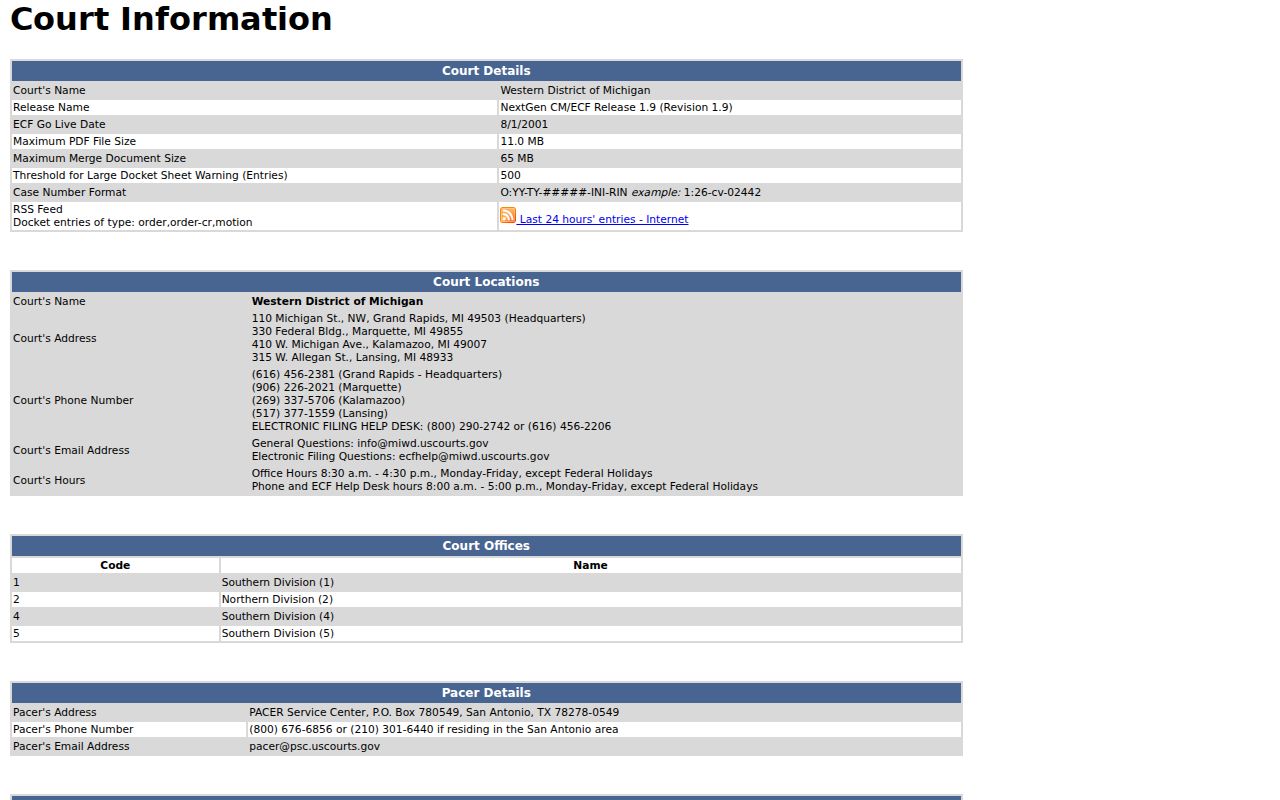
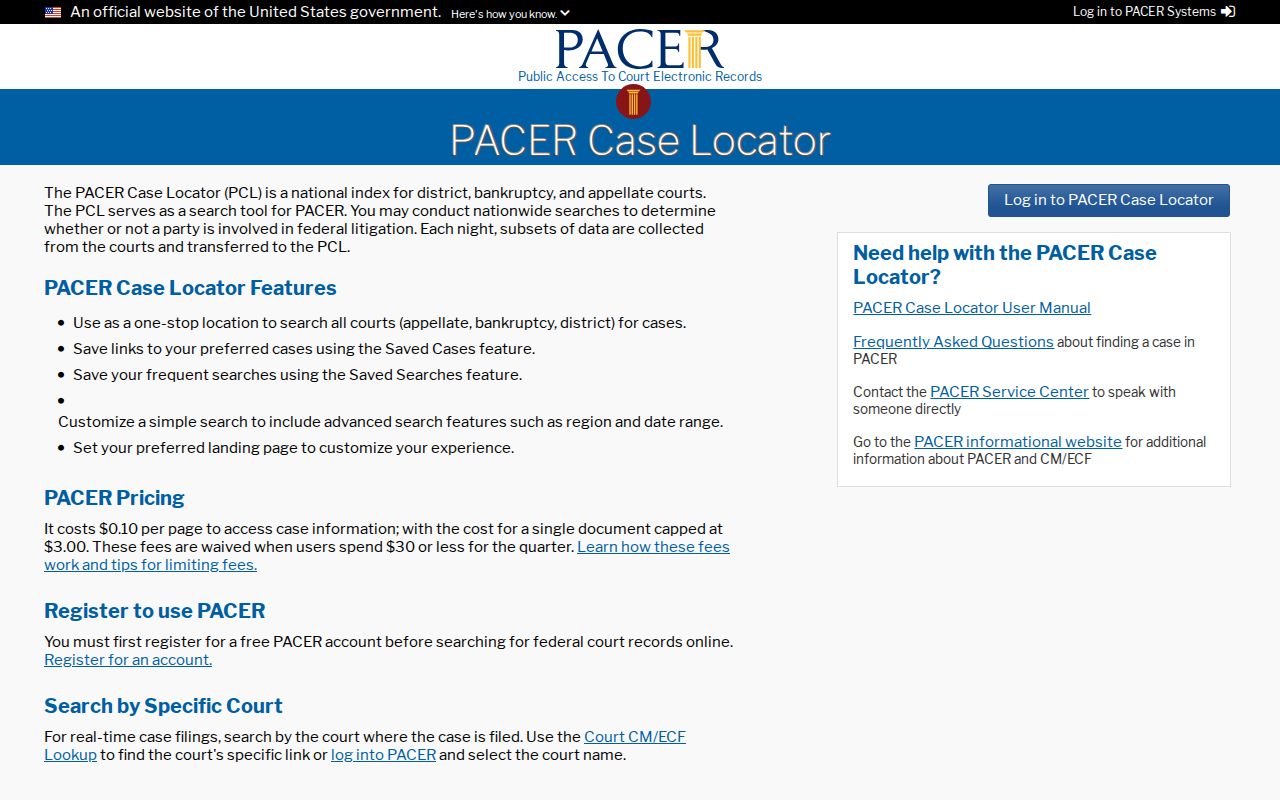
Federal sealed or restricted documents stay off ordinary public access, much as limits apply to some state court records. The PACER Case Locator is a federal case-location tool, separate from Kent County criminal docket services.
For final confirmation, use the court that owns the case record. That may be a Kent County court or a federal court.